How a tajine is cooked: clay pot, low heat, little water
Why the lid is a cone, why the heat stays low, and how to cook in a clay tajine at home without cracking it.
A tajine looks like it needs a secret recipe. Most of what makes it work is the pot itself and a lot of patience. Here is how it works.
The pot
A cooking tajine is made of earthenware, sometimes glazed or painted. The base is round and flat with low sides, and the lid is a tall cone or dome. Be careful when you buy one: some tajines are made only for decoration and cannot take the heat of cooking.
Why the lid is a cone
As the food heats up, steam rises into the cone, cools against the clay and runs back down onto the food. Very little water is lost, so a tajine needs only a small amount of liquid to begin with. Once most of the liquid is gone, the hot pot goes on cooking the food from below, almost like an oven.
Low heat, all the way
Traditionally a tajine sits over hot charcoal in a clay brazier. At home you can use the lowest heat on a stove that still keeps the stew at a gentle simmer, or a slow oven. A heat diffuser between the flame and the pot spreads the heat evenly.
Clay does not like shocks. A sudden change of temperature, like a cold pot on a high flame or cold water into a hot pot, can crack it. Heat it slowly and let it cool slowly.
Building a vegetable tajine
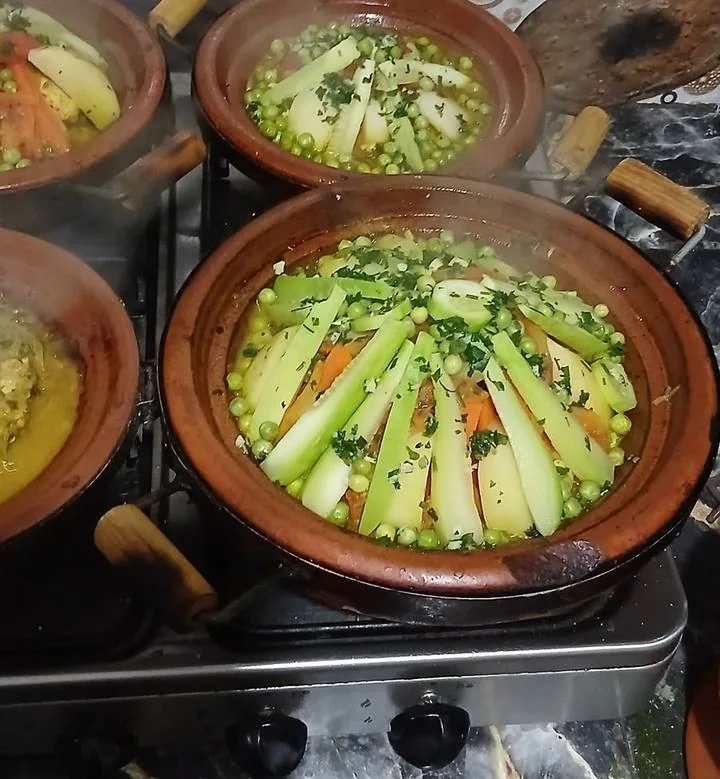
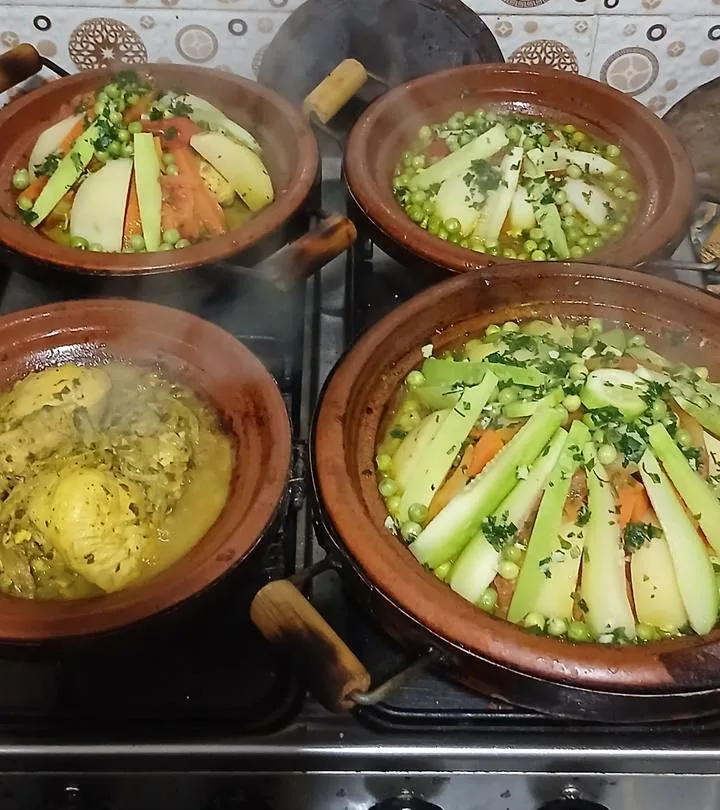
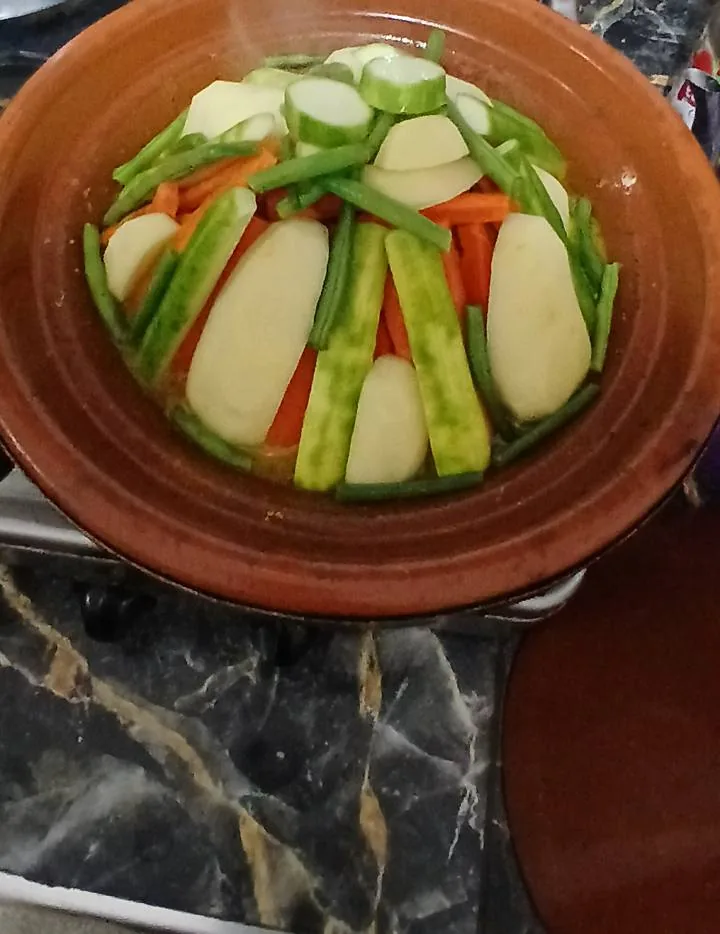
In our kitchen the vegetables are laid out by hand before the lid goes on: potatoes, carrots, courgette, tomato and green peas, arranged in a fan or a cone, with fresh herbs on top.
To try it at home, keep to the principles above:
- Use a cooking tajine, not a decorative one, and a diffuser if you cook on a stove.
- Put a little oil in the base, then arrange the vegetables so they sit together in a mound under the lid.
- Season with the classic spices: ginger, cumin, turmeric, cinnamon, saffron, and paprika or chilli for vegetables.
- Add only a small amount of water. The lid does the rest.
- Cook on the lowest heat that keeps a gentle simmer, and do not keep lifting the lid.
Tanjia: a different pot
Tanjia, from Marrakech, is cooked in a tall clay jar instead of a flat tajine. The jar is filled with meat, preserved lemon, cumin, garlic, saffron and a little olive oil, sealed with paper and left in embers or a low oven for hours. Traditionally it cooked overnight in the ashes of a home fire or a hammam.
If you would rather taste it than cook it, chicken tajines, meat tajines and tanjia are on our menu along with the vegetable tajines. Send us a message to ask what is cooking today.